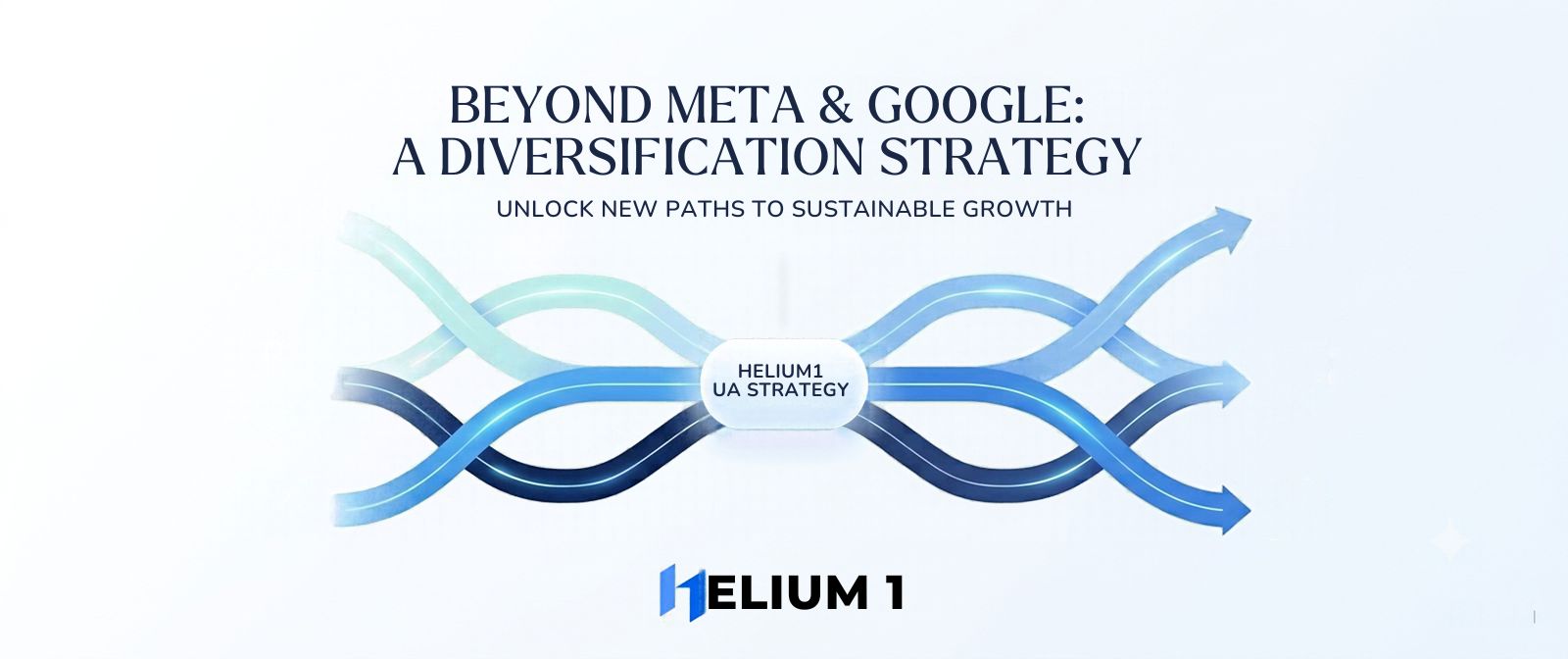
Imagine building your entire business on one road. Everything runs smoothly until traffic gets heavier, tolls get more expensive, or the road suddenly closes. You still have a great destination, but getting there becomes much harder.
Now imagine having several routes to choose from. That's exactly how user acquisition diversification works.
For years, Meta and Google have been the go-to platforms for businesses looking to attract new users. And for good reason: they offer enormous reach, sophisticated targeting, and powerful advertising tools. But in an increasingly competitive digital landscape, an important question deserves attention: are businesses limiting their growth by relying too heavily on just two platforms?
Let's explore why looking beyond the usual suspects could be one of the smartest moves in your user acquisition strategy.
1. The Comfort Zone Can Become a Costly Zone
Meta and Google are familiar territory for most marketers. Campaigns are running, dashboards are filling up, and the numbers look manageable. Why change something that works?
Here's the catch: when more advertisers compete for the same audiences, the cost of reaching those people can increase. Performance can also fluctuate with changing consumer behaviour, platform policies, auction dynamics, and creative fatigue.
A campaign that delivered excellent results last quarter might not deliver the same results today. And when most of your acquisition budget depends on a small number of platforms, even a minor performance dip can have a major impact.
Don't shop at just one mall
You wouldn't invest all your time in finding customers at just one shopping mall when thousands of potential customers visit other places every day. So why limit your digital growth to the same few advertising channels?
2. Meet the Players Beyond Meta and Google
The digital advertising ecosystem is much bigger than two platforms. Different channels offer different ways to discover, engage, and convert potential customers. Here are a few worth exploring:
TikTok: Where discovery happens
Short-form video gives brands an opportunity to introduce products in entertaining, relatable ways. It's particularly interesting for businesses whose audiences respond to visual storytelling and creator-style content.
YouTube: Turning attention into action
From product demonstrations to educational videos, YouTube can help brands build awareness, explain their value, and reach people who are actively exploring their interests.
Apple Ads: Reaching people searching for apps
For app marketers, Apple Ads can help connect an app with people searching for relevant products in the App Store, reaching users who may already have an interest in downloading an app.
Programmatic advertising: Finding audiences across digital inventory
Programmatic advertising uses technology to automate the buying and selling of ad placements. Depending on the campaign, it can help advertisers reach audiences across a variety of apps, websites, and other digital environments.
Pinterest and other discovery platforms: Inspiring the next click
For categories such as lifestyle, fashion, home improvement, and shopping, discovery-led platforms can introduce brands to people exploring ideas and planning purchases.
The lesson? Each channel has its own strengths, audience behaviour, and creative requirements. The goal isn't to advertise everywhere. It's to identify where your next valuable users are most likely to be.
3. Diversification Isn't About More Installs. It's About Better Growth.
Let's say two mobile apps each acquire 10,000 new users. At first glance, their acquisition strategies look equally successful. But what happens next?
App A acquires most of its users through one platform. Many download the app but never return. App B uses a combination of channels, evaluates the quality of users from each source, and invests more in the channels bringing people who register, make purchases, and continue using the product.
Which app has the stronger growth strategy? Probably App B, because an install is the beginning of the customer journey, not the finish line.
A well-planned diversification strategy can help businesses:
Reach new audiences: Discover potential customers who might not respond to existing campaigns.
Improve cost efficiency: Compare channels and allocate budget toward the strongest performers.
Reduce dependency: Avoid having the entire acquisition strategy tied to the performance of one platform.
Learn faster: Understand which audiences, messages, and placements drive meaningful actions.
Build sustainable growth: Develop multiple sources of valuable users rather than relying on a single acquisition engine.
Of course, adding channels doesn't automatically lower costs or improve results. Those benefits depend on execution, audience fit, measurement, and continuous optimisation. The real advantage comes from having more opportunities to find what works.
4. The Secret Ingredient: Measure What Happens After the Click
Here's where many acquisition strategies go wrong. A channel delivers inexpensive installs, so the budget increases. Another channel delivers fewer installs at a higher cost, so it gets switched off.
But what if the second channel brings users who purchase more often, stay longer, or generate greater lifetime value? Looking only at install costs could mean missing the bigger picture. Instead, businesses should look beyond surface-level metrics and evaluate the complete user journey.
Depending on your business model, track:
- Cost per registration
- Cost per first purchase
- Conversion rates between funnel stages
- Return on ad spend (ROAS)
- Retention and repeat purchases
- Customer lifetime value (LTV)
For example, imagine Channel A brings users at ₹50 per install, while Channel B brings users at ₹80 per install. Channel A may initially look more attractive. But if Channel B brings significantly more paying customers, it could ultimately deliver better business results.
The cheapest user isn't always the most valuable user. That's why effective diversification requires more than spreading budgets across platforms. It requires consistent measurement, reliable attribution, and a clear understanding of what success actually means.
5. A Smarter Way to Start Diversifying
Expanding your channel mix doesn't mean doubling your budget or launching campaigns on every available platform. A thoughtful approach is usually more useful than a rushed expansion. Here's a practical starting point:
Understand Your Audience
Where do your potential customers spend time? What content do they engage with? What influences their decisions?
Audit Your Current Performance
Identify which channels are delivering valuable users, where costs are rising, and where your current strategy has gaps.
Choose Two or Three Channels to Test
Start with platforms that align with your audience, business model, and campaign objectives.
Adapt Your Creative Strategy
An ad that works in a search result may not work as a short-form video. Give each platform a format and message suited to its audience.
Measure Consistently
Compare channels using meaningful business outcomes, not just clicks or installs. Allow for appropriate testing periods and attribution differences.
Scale What Works
Increase investment in channels that demonstrate sustainable performance, and keep learning from the ones that don't.
Remember: diversification isn't a one-time campaign. It's an ongoing process of testing, learning, and adapting.
6. The Future Belongs to Flexible Growth Strategies
Digital advertising will continue to evolve. Audiences will move between platforms, competition will change, and new advertising opportunities will emerge.
Businesses that build their acquisition strategies around a single source of growth may find themselves with fewer options when conditions change. Those that continually test new channels, understand their audiences, and optimise for meaningful outcomes can build a more flexible foundation for growth.
And that's the real point of diversification. It's not about abandoning Meta or Google. Both can remain essential parts of a successful acquisition strategy. It's about recognising that no single platform needs to carry the entire weight of your growth.
The Bottom Line
Your next high-value user might come from a search ad, a video, an in-app placement, or a platform you haven't explored yet. The opportunity lies in being willing to look beyond the familiar, test intelligently, and follow the data.
At Helium1, we believe effective user acquisition is about more than driving volume. It's about connecting businesses with the right audiences, optimising for meaningful performance, and building smarter paths to sustainable growth.
Because when it comes to acquiring users, having more routes to success can make all the difference. More channels. More opportunities. Smarter growth.